
You start a chat with a company, get busy, and call in an hour later. Now you’re repeating your whole issue from scratch because whoever picked up the phone has no idea what you already typed out. Everyone’s had that moment, and everyone hates it. Customer expectations have shifted past “just be reachable” into something closer to “remember me, no matter how I reach you.” That’s the whole idea behind omnichannel customer engagement, and it’s stopped being a nice extra. The companies who do it right see the results in customer satisfaction, loyalty, and how smoothly things run behind the scenes. The complexity of digital customer experience is expanding as more and more of it goes online. In this guide, we have outlined omnichannel customer engagement benefits, best practices for implementation, real world examples, and best practice for modern businesses.
What Is Omnichannel Customer Engagement?
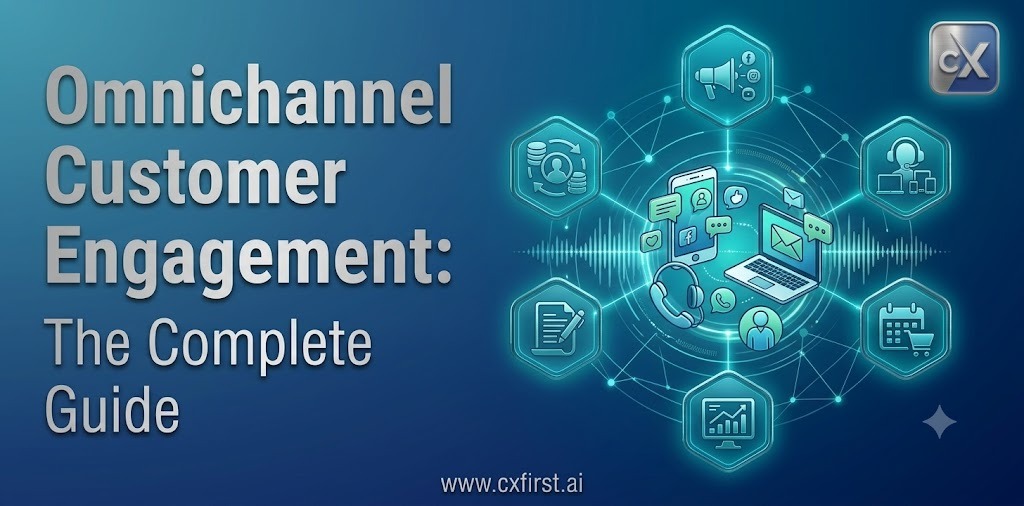
Here’s the plain version. Omnichannel customer engagement means a customer gets one connected experience no matter which channel they pick, phone, chat, email, social, WhatsApp, doesn’t matter. People mix this up with multichannel constantly, but they’re not the same thing at all. Multichannel just means a company happens to be on a bunch of platforms. Omnichannel means those platforms actually talk to each other. Message a business on Instagram, call them the next day, and the person on the phone already knows what you said. That’s the difference.
Businesses moved this direction because customers stopped tolerating anything less. A broken, disconnected experience sticks out immediately now, in a way it just didn’t a few years back. Get it right and it shapes the whole customer journey, not one interaction in isolation.
Why Is Omnichannel Customer Engagement Important?
Expectations keep climbing every year, and a lot of it comes down to one word: consistency. Same tone. Same information. Same level of service, whichever channel someone picks. Stop making customers repeat themselves and loyalty tends to follow almost on its own, in a way a fragmented experience never quite pulls off.
There’s a business case here too, not just a feel-good one. Companies with tighter cross-channel engagement tend to see it in their retention numbers and in how much smoother operations run day to day. It also plugs directly into whatever digital transformation work is already underway, since customer experience analytics only mean anything with one unified view of the customer behind them. Without that, a huge chunk of the insight a business actually needs just isn’t there to find.
Key Benefits of Omnichannel Customer Engagement
Deliver Consistent Customer Experiences
Voice, chat, email, social, messaging apps, whichever one someone picks, it should feel like one business responding. Not five teams that have never compared notes.
Improve Customer Satisfaction
Cut the part where someone explains their issue twice and you’ve saved them real effort. That effort saved shows up directly in satisfaction scores.
Increase Customer Retention
People stay loyal to businesses that remember them. Connected experiences across channels are what make that possible once volume gets big.
Better Business Insights
Customer experience analytics pulled from one unified view give a much clearer read on what’s actually working than piecing together five disconnected systems after the fact.
Core Components of an Omnichannel Customer Engagement Strategy
Nothing here works in isolation. Each piece leans on the others.
Unified Customer Data
One complete, accurate view of the customer across every channel. Everything else in this list is built on top of this.
CRM Platform Integration
A properly connected CRM platform means every team sees the same history. That’s the difference between personalization that’s real and personalization that’s just a slide in a sales deck.
AI-Powered Customer Support
AI voice agents and conversational AI voice agents take the routine, repetitive conversations off human hands, freeing agents for the calls that need actual judgment.
Contact Center Analytics
Contact center analytics software shows exactly where a customer journey starts falling apart, so a business fixes the actual pattern instead of one complaint at a time.
Best Practices for Successful Omnichannel Customer Engagement
Understand Customer Journeys
Map every touchpoint a customer might hit. The gaps in that map are usually right where a disconnected experience shows up first.
Personalize Every Interaction
Personalize every interaction using CRM data and AI-driven insight, so a returning customer doesn’t get treated like a stranger just because they switched channels this time around.
Maintain Consistent Messaging
Keep messaging consistent. Tone, information, brand voice, none of it should shift depending on the channel. Someone moving from chat to a phone call shouldn’t feel like they’ve been transferred to a different company entirely.
Measure Performance Continuously
Measure performance continuously, not once a quarter. Engagement, satisfaction, conversion, all of it. Small problems compound fast when nobody’s actually watching.
Real-World Examples of Omnichannel Customer Engagement
A retail brand connects chat, social, and phone support so someone asking about an order on Instagram gets the same answer they’d get calling in. Banking and financial services let a customer open a dispute in the app and finish it on the phone without repeating account details twice. Healthcare providers link patient portals with phone-based scheduling and reminders so the two never feel disconnected. Telecom companies tie chat support, IVR, and account management into one thread instead of three separate ones. Travel and hospitality brands connect booking platforms, service lines, and messaging apps so a traveler can change a reservation from whatever channel’s most convenient right then. Same pattern everywhere: AI, CRM, and voice support working together instead of sitting in their own silos.
How AI Is Transforming Omnichannel Customer Engagement
AI voice agents handle a large amount of routine conversations, freeing up human staff for the harder stuff. Conversational AI is getting so good that many customers don’t realize they aren’t talking to a person until about half way through the call. Auto-routing gets the caller to the correct department the first time, rather than sending them to two different departments. The answer is delivered the second someone asks, on any channel, no queue. Expert recommendations are based on purchase and interaction data, not a hunquick guess. Predictive customer insights can help a business see a risk of churn or recurring complaint before it turns into something worse. AI voice customer service and conversational AI voice agents haven’t just sped up the old process here, they’ve changed what’s actually possible.
Choosing the Right Omnichannel Customer Engagement Platform
Check for these before you commit to anything:
- Real AI capabilities, not a chatbot with a new label slapped on
- CRM integration that syncs data both directions, not just one
- True omnichannel communication across voice, chat, email, and messaging
- An analytics dashboard that actually surfaces patterns instead of just raw numbers
- Automation that runs routine work without someone babysitting it
- Security and compliance standards that fit your industry
- Scalability that holds up once interaction volume grows
- Implementation that takes weeks, not a project that drags into months
Pick a platform built for where customer experience needs to be a few years out, not just where it sits today.
Conclusion
Omnichannel customer engagement isn’t optional anymore for a business that actually wants to keep its customers. Done right, both sides win. Customers get a more seamless, consistent experience, and businesses get the efficiency and insight only derived from one connected view of every interaction. AI and analytics allow this at scale, and choosing a platform built to grow with your business is just as important as picking the features it comes prepackaged with.
Having trouble delivering consistent customer experiences across all channels? CXFirst empowers you with AI-powered customer engagement solutions, voice agents, analytics, and CRM integrations to deliver seamless, connected, and exceptional customer experiences.
Ready to see CXFirst.ai in action?
Talk to our team and find out how an AI-native platform can transform your customer experience.
Book a Demo